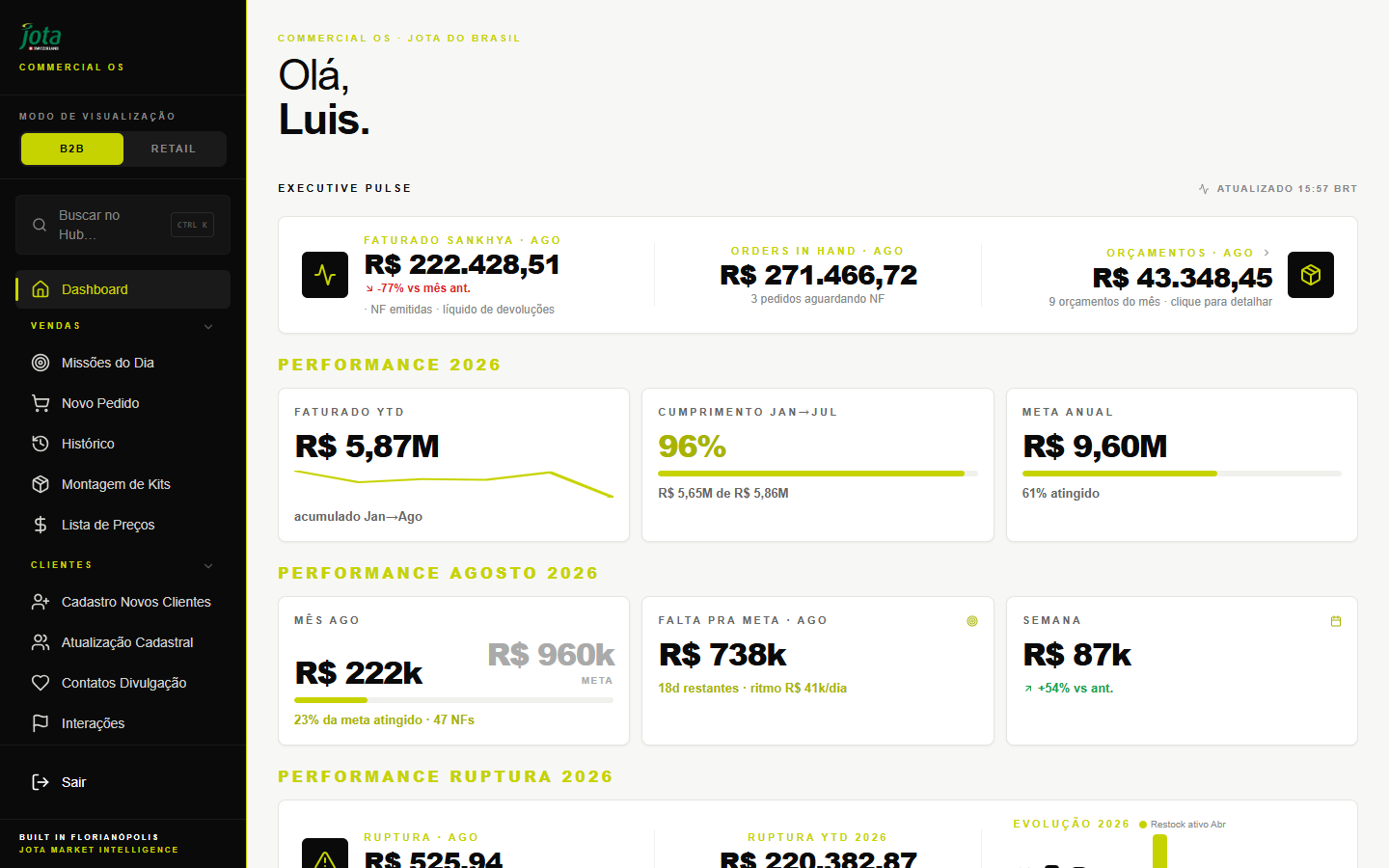
Orders, kits, customers and intelligence in one place — from any phone, wherever the customer is.
Goal against actual, invoicing reconciled with the ERP, the orders that have not been billed yet, and the customers who need attention today. Leadership and each representative see the same platform through a different lens.
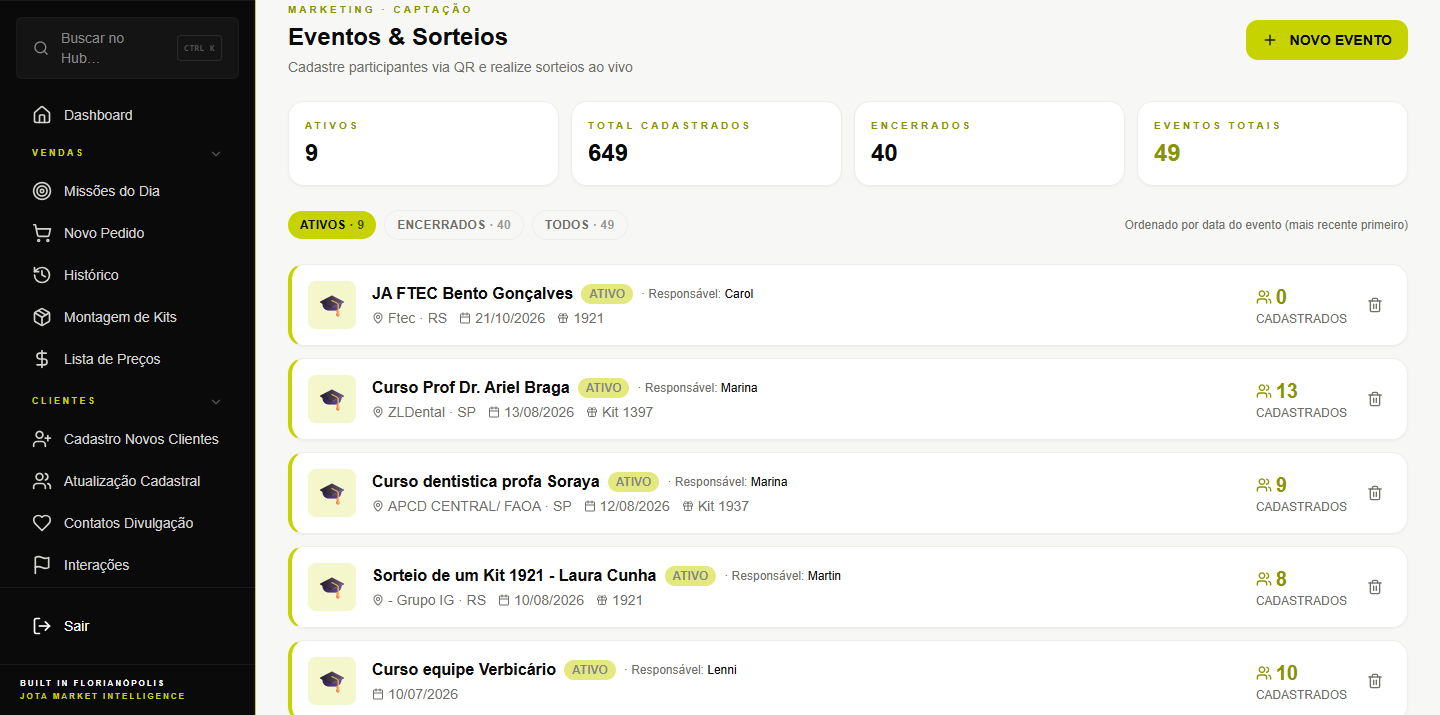
An order built on a phone in a waiting room reaches the ERP as a quotation, with the right price tier, the right tax and the right payment terms. No re-typing, no second system.
Custom kits for professors and universities travel through a seven-stage approval flow, each stage notifying the next person — and ending as a registered product.
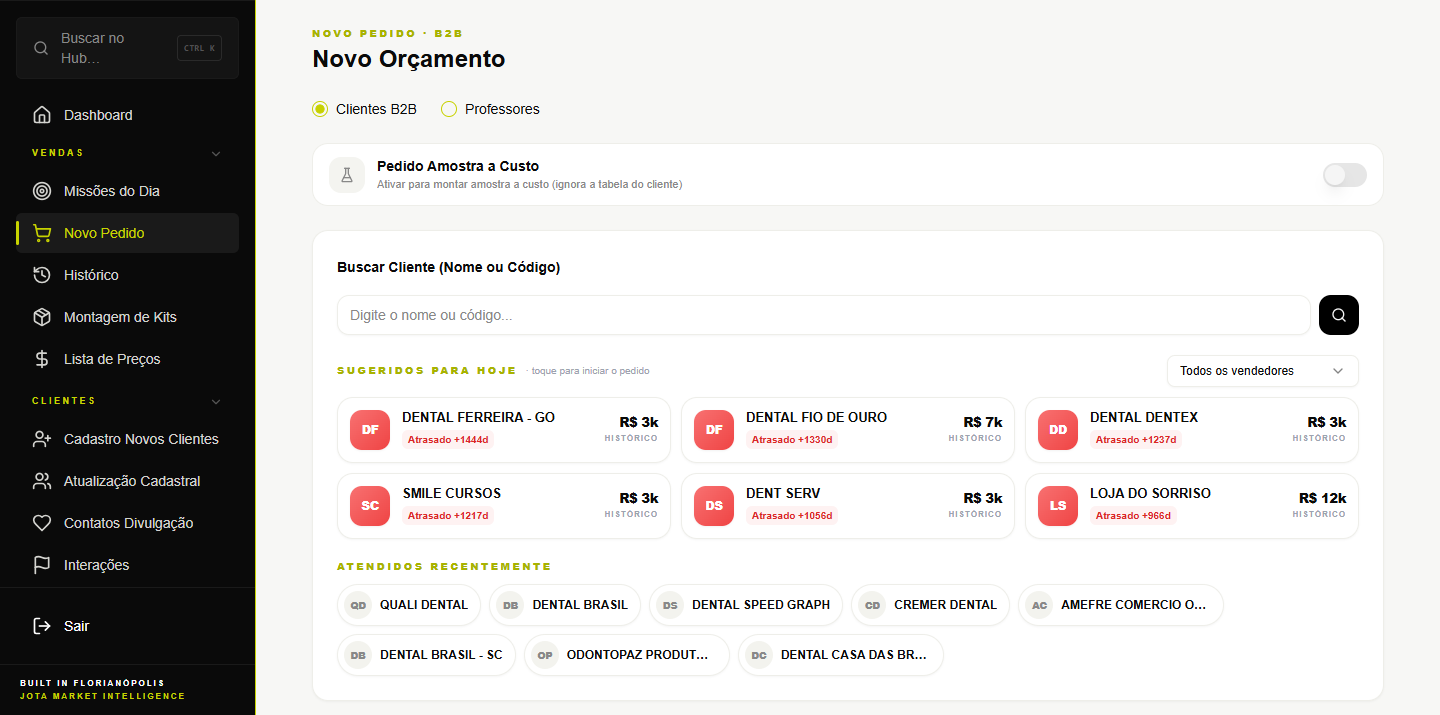
The representative shares a tokenised link; the customer confirms their own data without an account. What changed is highlighted, reviewed by a person, and the loop closes with the ERP as the source of truth.
Alongside it, a relationship CRM for the professors, dentists and coordinators the outreach team works with — how we met, what was discussed, what comes next.
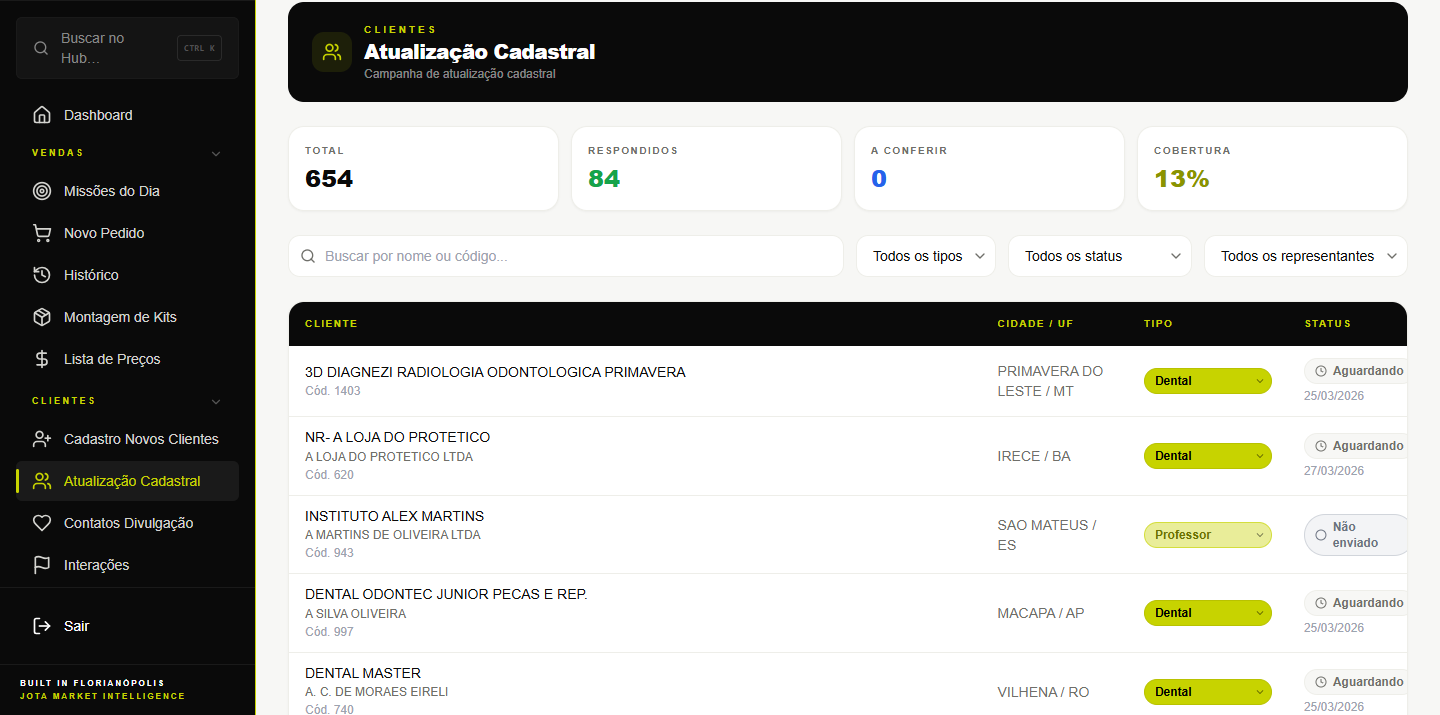
A printed QR code sends every visitor to a public form. They register themselves, receive a WhatsApp message with their lucky number, and the raffle is drawn live — with the pool and the draw recorded for audit.
One click promotes the participants into the CRM, de-duplicated. The event ends and the follow-up already exists.
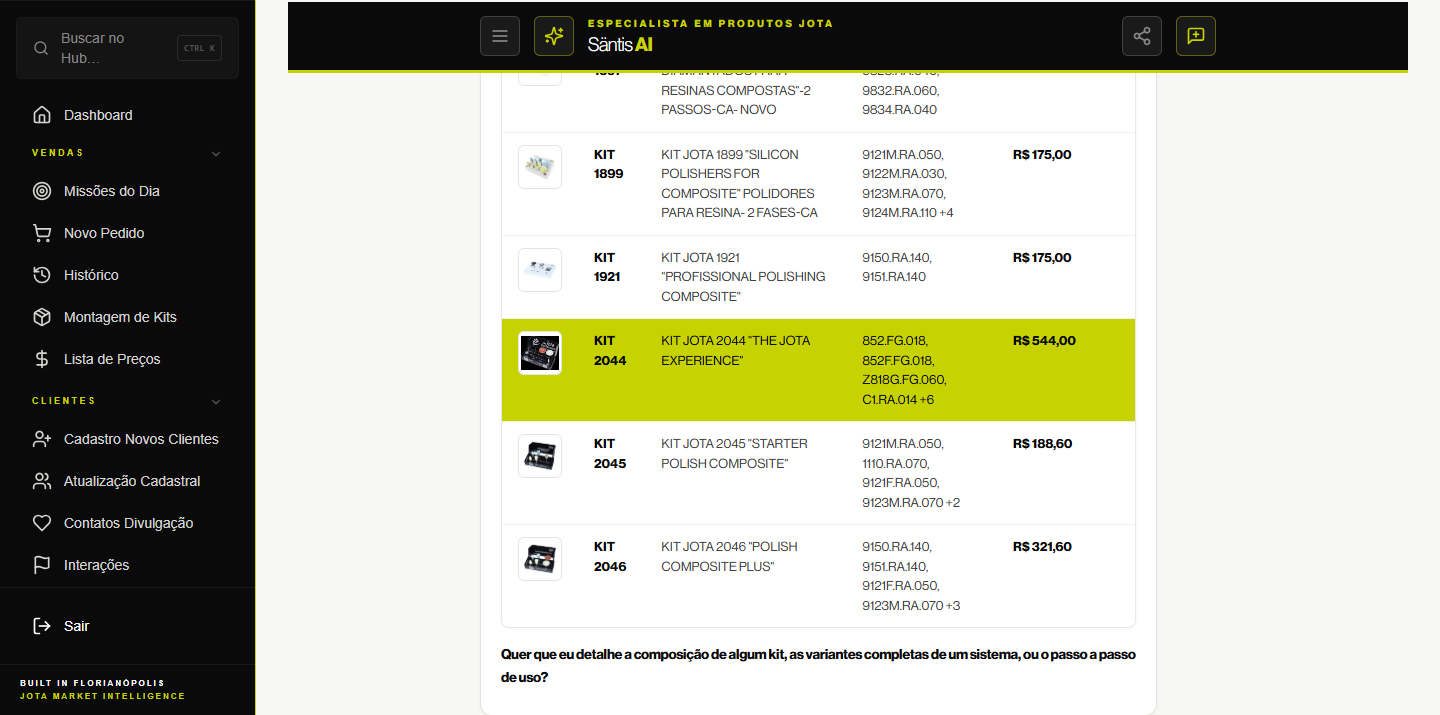
Säntis is the product assistant. It answers from the real catalogue — indications, materials, kit composition, retail price — because the facts are assembled by the platform, not improvised by a model. It is named after the peak at whose foot JOTA was born.
Jota Analyst is the analytics assistant, reserved for the leadership team: it queries the operation, builds reports and never writes to the ERP without a human confirming.
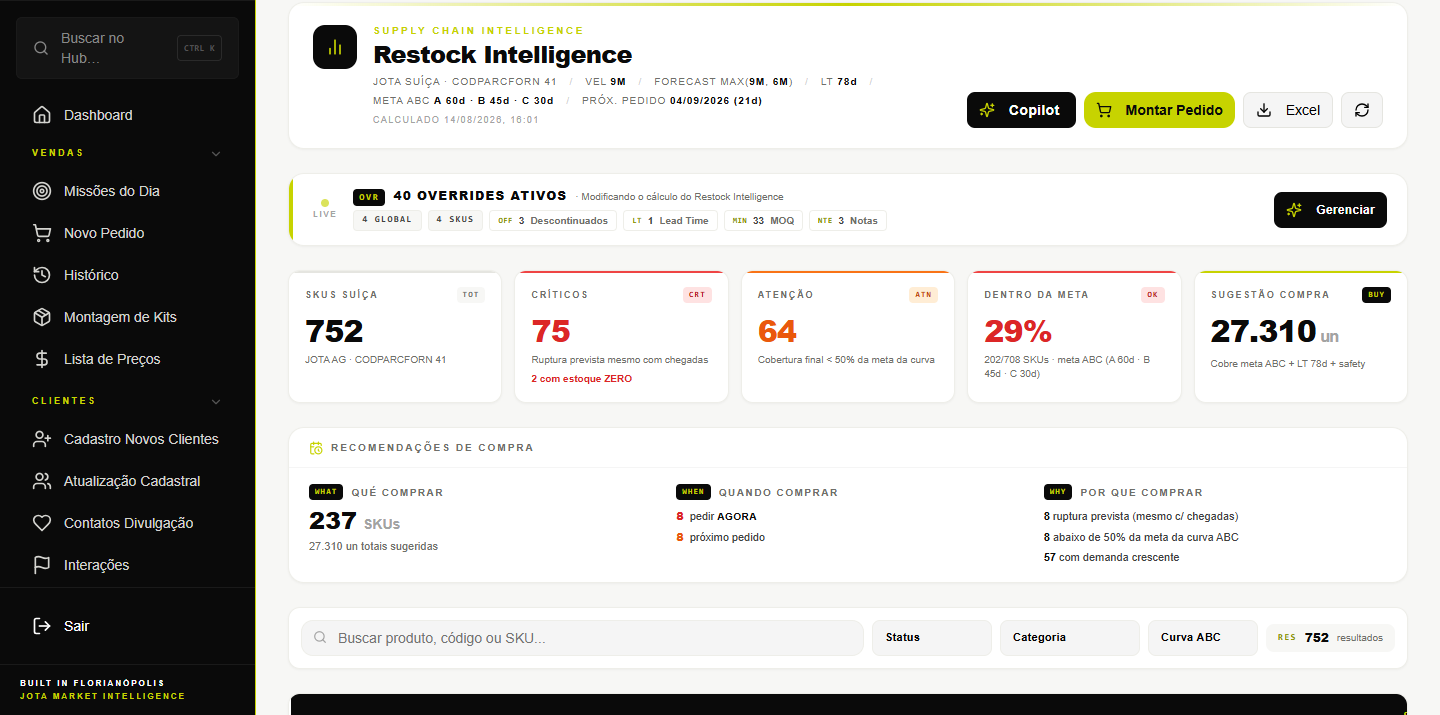
Demand forecast per product, effective stock including what is already in transit, and a purchase proposal the buyer edits rather than writes. A dedicated assistant simulates scenarios before anything is ordered.
And the other side of the same coin: confirmed orders that were never invoiced because an item was missing — quantified, per representative, per customer.
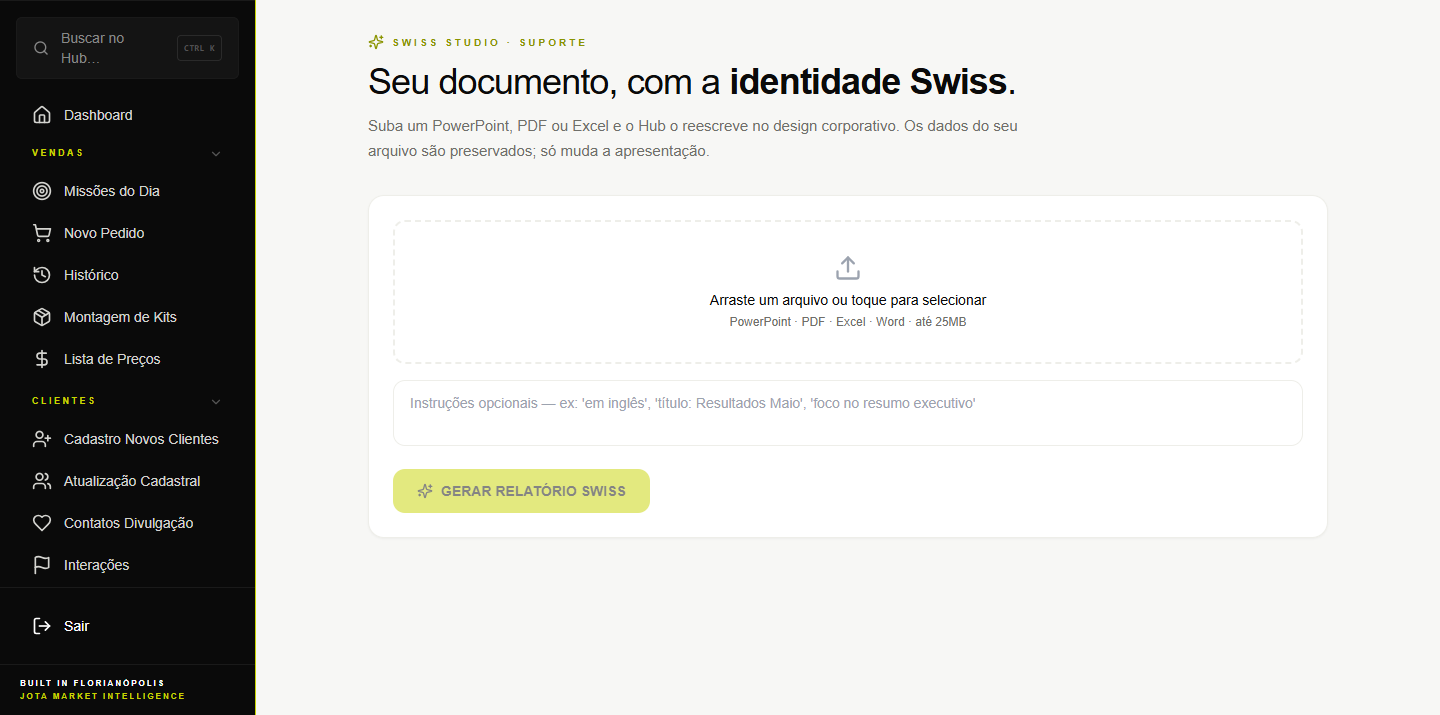
One visual-identity engine produces every executive report, proposal and public page in the same locked JOTA identity, derived from the 2026 brand manual. Upload a slide deck or a spreadsheet and it comes back in corporate design — the data preserved, only the presentation changed.
The public kit pages replaced a paid third-party catalogue service: the QR code on the box opens the composition of that exact kit, kept in sync automatically.
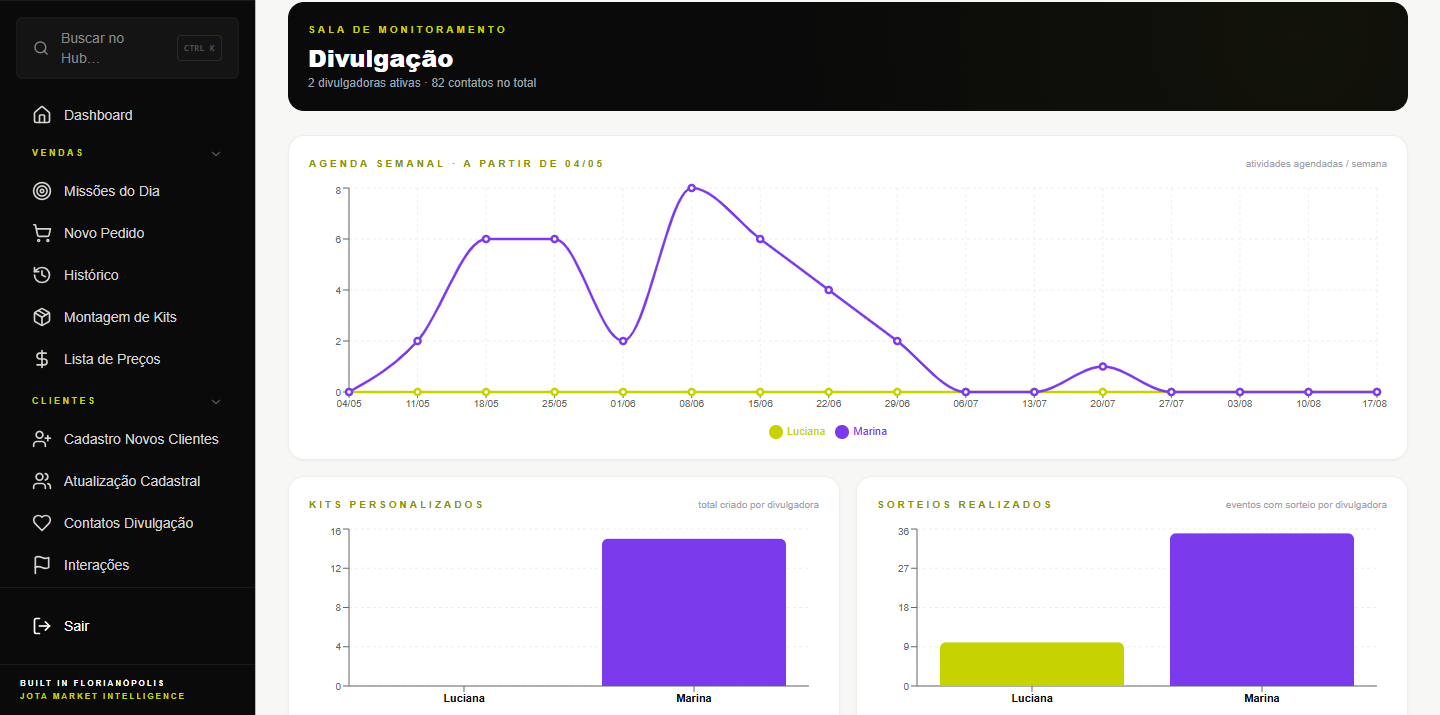
The outreach team’s activity, the kits they created, the raffles they ran and the week ahead in their calendar — visible to leadership as it happens, side by side, and scalable from one person to many without rebuilding anything.
Material requests arrive, get approved and get dispatched in the same place, so nothing lives in a private chat thread.
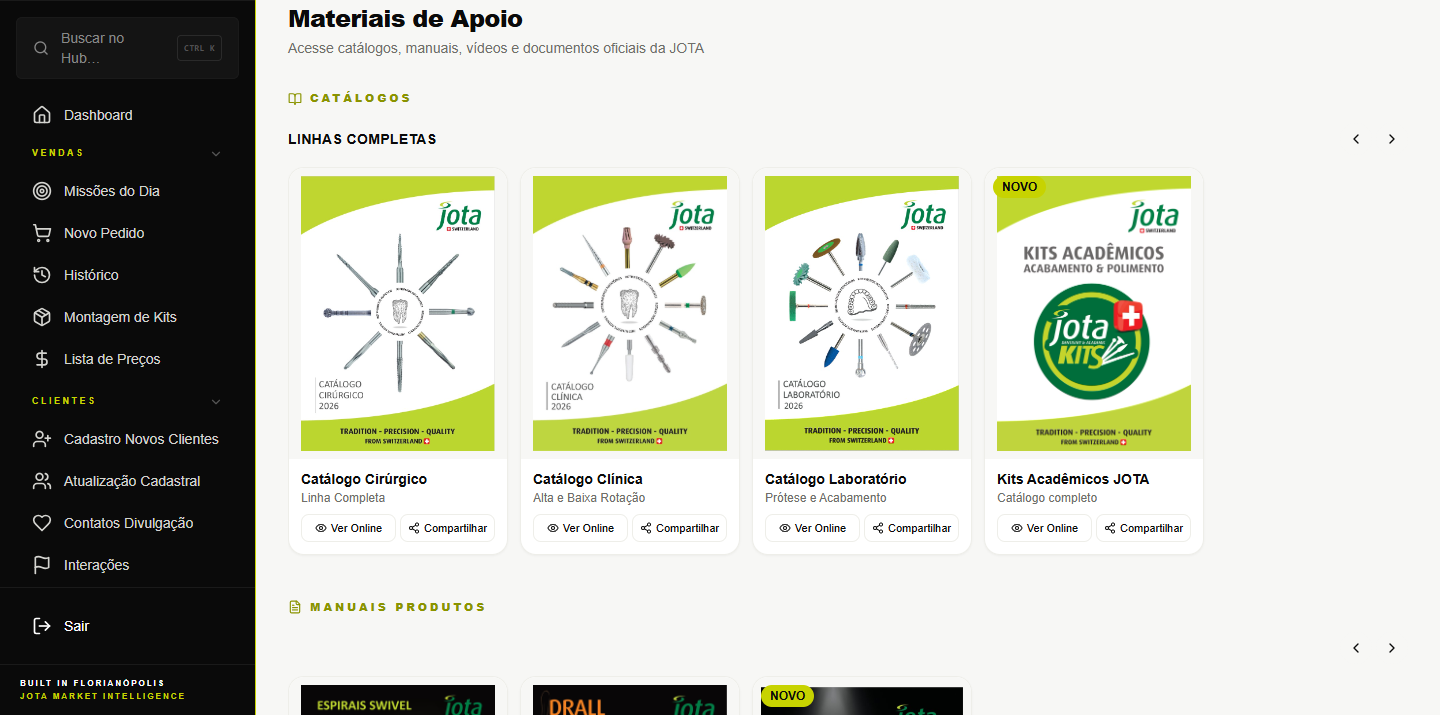
Catalogues that turn like a printed book, manuals, technical documents, the shared calendar, and customer service — inside the platform, so nobody has to remember which drive or which folder.
Weekly, monthly and quarterly — written, designed and e-mailed without anyone opening a file.
The ERP is the source of truth; the platform mirrors it and reconciles the difference.
Each approval step reaches whoever has to act, by WhatsApp or e-mail.
The kit pages rebuild themselves from the live composition and repair their own mirror.